


Design and Production of Packaging for Automotive Parts
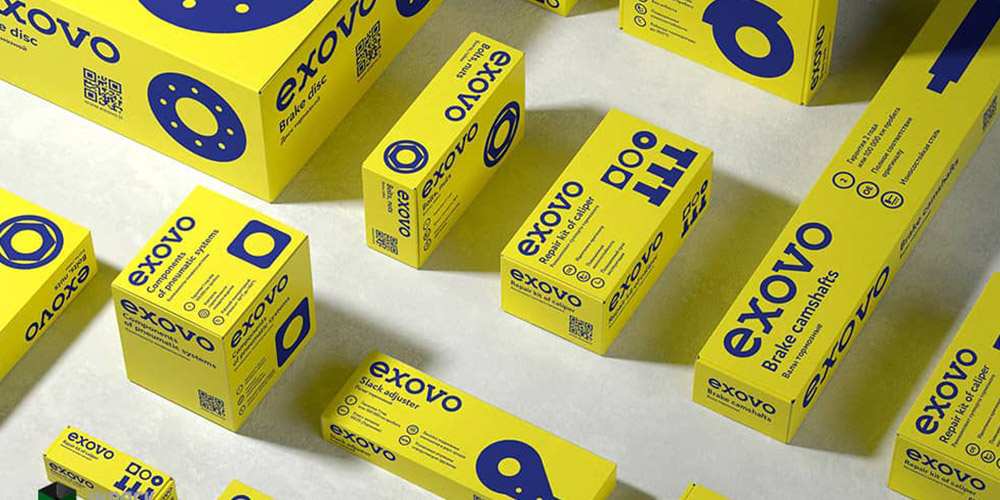
Designing and producing packaging for automotive parts requires strict adherence to technical, safety, economic, and functional standards, as these components are often:
- Heavy or bulky
- High-value or sensitive
- Handled within industrial supply chains
- Require precise identification and fast installation
Below are the key features of effective automotive parts packaging design and production:
Key Features of Automotive Parts Packaging
- Strong Physical and Mechanical Protection
The packaging must protect the part against impact, pressure, vibration, and abrasion.
Common solutions include foam inserts, multi-layer corrugated board, rigid cartons, and moulded plastic trays.
- Resistance to Environmental Factors
Packaging should be resistant to moisture, dust, oil, corrosion, and temperature fluctuations.
For export purposes, anti-corrosion standards (VCI – Volatile Corrosion Inhibitor) and proper sealing are required.
- Ease of Handling and Transportation
Use of handle-equipped, pallet-compatible designs or boxes with secure locking systems enables fast warehouse handling and loading.
Barcodes or labelled identification systems are essential for efficient tracking throughout the logistics chain.
- Efficient Warehouse Stacking (Stackability)
Standardised dimensions allow safe stacking and optimal use of warehouse space.
Durable packaging is required for long-term storage and heavy-duty transportation.
- Easy Part Identification
Clear printing or labelling with technical part information such as part code, vehicle model, serial number, manufacturer brand, and production date.
In some cases, transparent windows or QR codes are used for quick visual inspection or digital access to specifications.
- Secure and Tamper-Proof Packaging
Use of security seals or tamper-evident tapes to prevent interference or counterfeit part replacement.
This is especially critical in the aftermarket and OEM sectors.
- Cost and Weight Optimisation
Optimised design helps reduce production and transportation costs without compromising safety.
In some cases, returnable packaging systems are used between manufacturers and assembly plants.
- Environmental Compatibility
Preference for recycled or recyclable packaging materials, especially in large automotive industries.
Compliance with environmental regulations such as European directives or ISO 14001 standards is essential.
Examples of Suitable Packaging for Different Automotive Parts
| Part Type | Recommended Packaging |
| Bearings and small components | Paperboard box with foam insert or laminated carton + detailed label |
| Headlights or bumpers | Large multi-layer carton with shock-absorbing foam + scratch-protection film |
| Heavy metal parts | Wooden pallet + metal straps + anti-corrosion and moisture-resistant wrapping |
| Decorative plastic parts | Protective film wrapping + compartmented cardboard dividers |
| Electronic systems | Anti-static (ESD) box + shock-resistant packaging |
Conclusion
Automotive parts packaging must deliver a balance of durability, security, and logistical efficiency.
An effective design not only protects the product physically but also reduces human error, speeds up processing, and strengthens brand credibility.